Quick answer
A good kitchen chimney installation comes down to four things: mounting the hood at the height shown in the model's manual, running the shortest and straightest possible duct to the outside, giving it a safe earthed socket, and making sure the kitchen has a way for fresh air to come in. Get these right and the hood delivers the suction it was built for.
The best kitchen chimney installation is the one you never have to think about again. The hood sits level, the smoke disappears out of the wall, and the fan runs quietly at every speed. The opposite is just as common: a powerful hood connected to a long, crushed, flexible pipe with three sharp bends, hanging a little too high, and delivering only a fraction of its rated suction.
The difference between those two outcomes is almost always planning. This guide walks through what to decide before the installer arrives, so your hood performs as its specification promises. It applies to most wall-mounted range hoods and chimneys, but your model's own installation guide always comes first.
01Step 1: Decide the mounting height
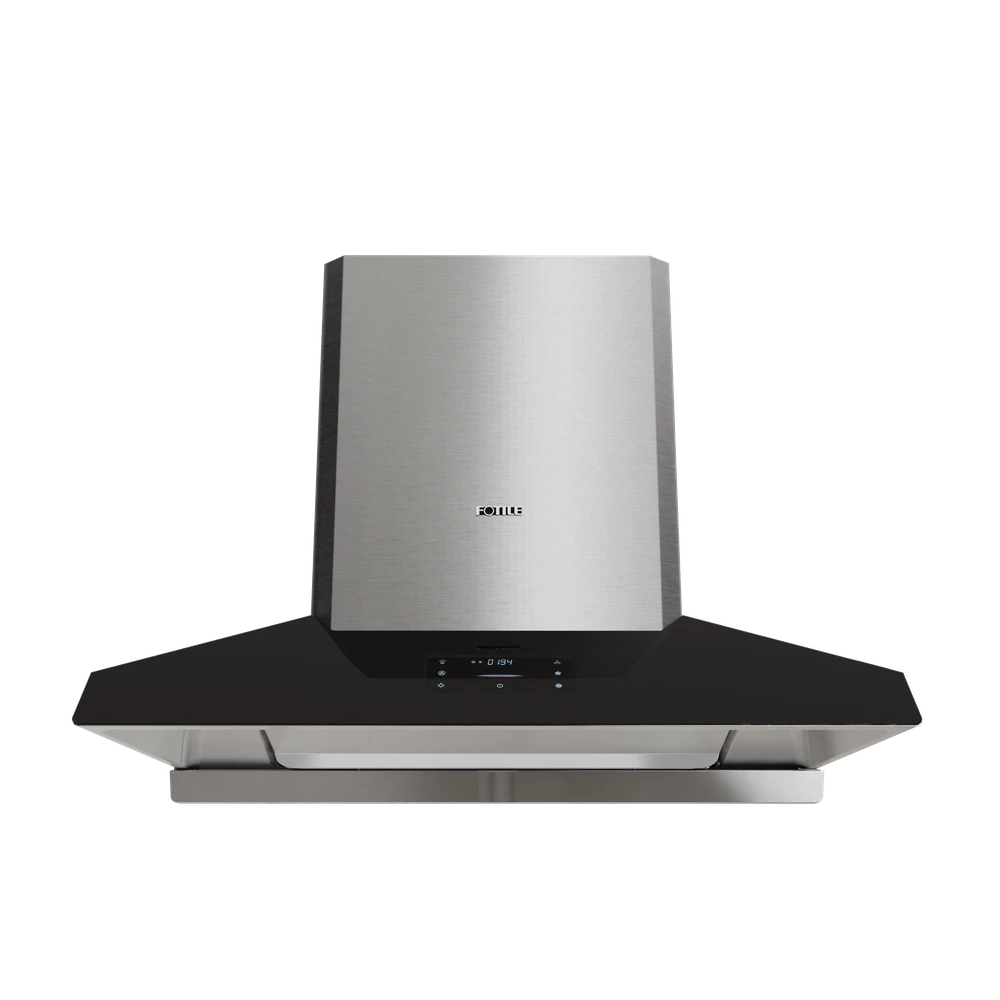
Height is the first thing people ask about and the one most often guessed. Traditional chimney-style hoods are generally mounted around 65 to 75 cm above a gas hob, high enough to be safe and to leave room to work, low enough to capture the plume. Modern side-draft hoods are designed to work at a different distance, so never copy a number from a different style of hood.
Use the figure printed in your model's installation guide and confirm it against the people who cook in the kitchen. A tall cook may prefer the top of the permitted range, while a shorter cook may need the hood a touch lower to avoid bumping their head. Capture is better the closer the hood sits within the allowed range.
02Step 2: Plan the duct route
The duct is where most installations lose performance. Every extra metre and every bend adds resistance and reduces the air your hood actually moves. As a rule, plan the shortest route from the hood to an outside wall, keep it as straight as possible, and avoid sharp 90-degree elbows where a gentler curve is available.
- Match the outlet size. Use a duct that matches the hood's outlet diameter. Reducing it chokes the airflow.
- Prefer smooth rigid pipe. Ribbed flexible pipe creates turbulence and collects grease. If you must use flexible pipe, keep it short and pulled tight.
- Add an outside cap with a flap. A back-draught flap keeps wind, insects and rain from travelling back down the duct.
- Vent to the outdoors. Never terminate the duct in a ceiling void, a shared shaft or a neighbour's space.
If the hood is going to recirculate instead of venting out, the rules change. Read our comparison of ducted vs ductless range hoods before you decide.
03Step 3: Prepare the wall
A range hood is heavy, and it hangs over a hot, greasy workspace, so it must be fixed to a wall that can carry it. Solid brick or concrete is ideal. If the wall is plasterboard or has a tile finish over a weak surface, tell the installer in advance so the correct anchoring or a support frame can be arranged. Check that the wall is level and that the hood will not collide with a tall cabinet, window frame or shelf.
Ceiling height matters too. Many hoods use a decorative chimney extension to cover the duct, and its length depends on how high your ceiling is. Our team checks your layout before installation so the right extension is ready on the day.
04Step 4: Give it safe power
Your hood needs a dedicated, properly earthed socket within reach of its power cable, normally up inside the chimney cover or beside the hood. Household supply in Pakistan is normally 220 to 240 V, and the socket should be rated for the hood's power draw. Avoid extension boards and multi-plugs, and do not place the socket directly above the hob where heat and steam collect. If your area has frequent voltage swings, ask your electrician about suitable protection for sensitive electronics such as touch and wave controls.
05Step 5: Leave a way for air to come in
A hood that removes air needs air to replace it. In a tightly closed kitchen the fan strains, noise rises and suction falls. Keep a window slightly open, or make sure there is a door or vent that lets fresh air in while you cook. This also matters for safety in homes that have a gas geyser or any flued appliance nearby, where strong extraction can draw exhaust gases back into the room. If that describes your home, ask the installer to check before commissioning.
06What happens on installation day
- Site check. The team confirms the hob position, the wall type, the ceiling height and the duct route.
- Marking. The hood position is marked with a spirit level, usually centred over the hob.
- Drilling and fixing. Wall plugs and brackets go in, then the hood body is lifted and secured.
- Duct and cap. The duct is connected and sealed, and the outside cap is fitted.
- Power and test. The hood is connected, every speed is tested, and the lights and controls are checked.
- Handover. You are shown how to remove and clean the filters and how each control works.
A simple installation with a short, direct duct route can often be finished in a few hours. Cutting a new hole through a thick or tiled wall, or running a longer duct, takes more time. Whoever does the work, use an authorised installer, since installation arranged through Fotile Pakistan comes with the full Fotile warranty. The Fotile service centre page explains how warranty and service work.
07Common installation mistakes at a glance
| Mistake | What goes wrong | The fix |
|---|---|---|
| Long duct with many bends | Suction drops and noise rises | Shortest straight route, gentle curves |
| Ribbed flexible pipe | Turbulence and grease build-up | Smooth rigid duct, or very short flexible |
| Wrong mounting height | Smoke escapes or the hood is unsafe to use | Follow the model's manual |
| Hood not level | Oil collects on one side and drips | Use a spirit level at every step |
| Sealed kitchen | Fan strains and the hood underperforms | Allow fresh air in while cooking |
| Extension board power | Overheating and nuisance trips | Dedicated earthed socket |
08Before you buy, think about the install
The easiest installation is one planned before the hood is chosen. Measure the width of your hob, note the wall the duct will leave through, and check the ceiling height. If you are renovating, our kitchen planning guide for Pakistani homes and appliance checklist for renovations will help you settle the hood position along with the rest of the layout.
Still choosing a hood? The 90 cm EMG9036 and the flagship AMG9054-Y are two models to start with, and our team can check either against your duct route before you order.
Once the hood is in, protect your investment. Clean the filters regularly, as described in how to preserve your Fotile appliances, and pick the right power for your cooking style using our kitchen chimney suction power guide. When you are ready, browse the full kitchen hoods and chimneys collection.
Frequently Asked Questions
How high should a kitchen chimney be installed above the hob?
Traditional chimney hoods are commonly mounted around 65 to 75 cm above a gas hob, but side-draft and other modern styles are designed for different distances. Always follow the mounting height in your model's installation guide.
Can I install a kitchen chimney without a duct pipe?
Some hoods can run in recirculation mode with a carbon filter, but they do not remove steam, heat or heavy oil fumes as effectively as a ducted hood that vents outdoors. For daily desi cooking, venting outside is strongly recommended.
How long does kitchen chimney installation take?
A straightforward installation with a short, direct duct route can often be completed in a few hours. Drilling through a thick or tiled wall, or running a long duct, takes longer. The installer can give you a more exact estimate after a site check.
What kind of duct pipe is best for a range hood?
Smooth rigid duct that matches the hood's outlet diameter is best because it keeps airflow high and does not trap grease. Ribbed flexible pipe adds turbulence, so if you need it, keep it short and pulled straight.
Who should install my kitchen chimney to keep the warranty valid?
Use an authorised installer. Installation arranged through Fotile Pakistan comes with the full Fotile warranty, and our team checks your layout beforehand. The service centre page explains how warranty and service work.
Not sure which chimney suits your kitchen?
Send us your kitchen size, the hob you use and the length of the duct run on WhatsApp, or call 042 111 13 15 17. Our team will suggest the right model and confirm today's price and availability the same day. You can also add the hoods you like to your Quote Basket from the Range Hoods page and we will take it from there.