Quick answer
A gas hob is set up for one type of gas at a time. Natural gas and LPG need different jets (the small nozzles that feed each burner), so a hob built for natural gas will not burn properly on LPG until a trained technician changes the jets and checks the flame. Never swap jets yourself, and always confirm the gas type before you buy.
If you have ever asked whether a hob works on LPG or natural gas, you have asked about the LPG vs natural gas hob question, one of the most important in Pakistani kitchens. You have asked one of the most important questions in Pakistani kitchens. Some homes have a piped natural gas connection, some depend on LPG cylinders, and many have both at different times of the year. Gas pressure that drops in the evening, or a move to a flat with no pipeline, can make you wonder whether your hob will still work.
This guide explains the difference in plain terms, shows which Fotile hobs support which gas, and covers the safety points that matter most. It is general information. Your hob's manual and a trained technician always have the final word.
01Why the two gases need different jets
Natural gas and LPG are different fuels. They carry different amounts of energy, they arrive at different pressures and they need different amounts of air to burn cleanly. Each burner has a small nozzle, called a jet or injector, that controls how much gas enters. LPG is normally supplied at a higher pressure, so its jet has a smaller opening. Natural gas, supplied at lower pressure, needs a larger opening to deliver enough fuel.
Put natural gas jets on an LPG supply and the flame becomes too big, noisy and unsafe. Put LPG jets on a natural gas supply and the flame is weak, yellow and slow. That is why conversion is a job for a trained technician with the right jet kit for the exact model.
02Natural gas and LPG at a glance
| Point | Natural gas | LPG |
|---|---|---|
| How it arrives | Pipeline connection to the home | Refillable cylinder |
| Jets | Larger opening | Smaller opening |
| If a leak happens | Lighter than air, rises | Heavier than air, sinks and collects low down |
| Where it is stored | No storage needed | Cylinder kept upright in a ventilated space |
| Typical worry | Weak pressure at peak hours | Running out mid-cooking, safe storage |
One safety point comes from that table. Because LPG is heavier than air, a leak settles near the floor, so cylinders should never be kept in a closed cabinet or a low pit, and a leak is something to treat seriously at once.
03Which Fotile hobs support which gas?
Fotile lists the gas type on each product page. Here are some examples so you can see how it works.
| Model | Gas type listed |
|---|---|
| GAL90506 | LPG and natural gas |
| GLG86520 | LPG and natural gas |
| GHG88330-W (Opal) | Natural gas or LPG, with the correct jets confirmed by our team for your kitchen |
| GHG86328 | Natural gas |
| GHG78312 | Natural gas |
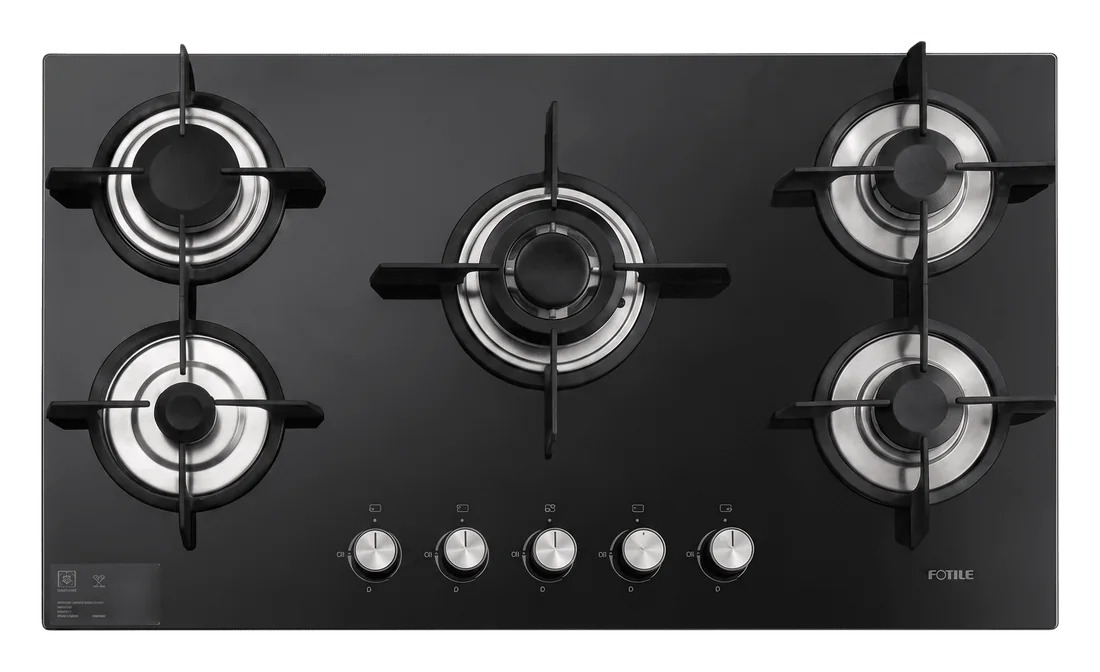
If your home runs on LPG and you like a model listed for natural gas, do not assume it will work. Ask first. Our team can tell you whether a jet kit is available for that exact model and arrange the conversion safely. The Fotile service centre page explains how to reach us.
04Low gas pressure: what to do (and what not to do)
Many households notice weak flames at the busiest cooking times, when everyone on the line is using gas at once. A weak flame is not always a sign of a faulty hob. It can simply reflect low supply pressure. A few practical points:
- Do not use gas boosters or compressors. They are unsafe and, in many places, not permitted by the gas utility. Ask your gas company what is allowed.
- Have the flame checked. A technician can confirm that the jets, burner caps and air shutters are clean and correct.
- Pick efficient burners. A hob with high thermal efficiency, such as the 60 percent rating on the GHG78312 and Opal GHG88330-W, turns more of every cubic metre of gas into useful heat.
- Consider a second fuel option. Some families keep an LPG cylinder as a backup. If you do, choose a hob that officially supports both gases.
05LPG cylinder safety checklist
- Keep the cylinder upright, outside or in a well-ventilated space, and away from heat and direct sun.
- Use a regulator and hose designed for LPG, and replace damaged or old hoses.
- Never store a cylinder in a closed cabinet or below ground level, because LPG collects low.
- Check for leaks with soapy water on the joints, never with a flame. Bubbles show a leak.
- If you smell gas, do not touch switches or light anything. Close the supply, open windows and ventilate, then call a technician.
06How a safe conversion works
Conversion between natural gas and LPG is not a do-it-yourself job. A trained technician follows these steps:
- Confirms the model and checks that a correct jet kit exists for it.
- Shuts off the gas and removes the burner caps and heads.
- Replaces the jets for the new gas and adjusts the air supply.
- Reconnects the hob with the correct regulator and checks every joint for leaks.
- Lights each burner and checks for a steady blue flame, then confirms that the flame stays lit on the lowest setting.
Colour of the flame tells a story
A steady blue flame with a small inner cone means good combustion. A yellow, orange or lazy flame, or soot on the pots, suggests wrong jets, a dirty burner or poor air supply. Stop using the burner and call a technician rather than adjusting it yourself.
07Questions to ask before you buy a hob
- Which gas does my home use today, and could it change?
- Is this exact model listed for that gas?
- Does the price include the right jets, regulator and hose?
- Who will install and test it, and is the warranty kept?
Once you know your gas type, read our guide to choosing the best gas hob for Pakistani kitchens to compare burner power, pan supports and sizes. If you are unsure whether to stay with gas at all, our gas vs electric hobs comparison may help. Browse the full gas hobs range when you are ready.
Frequently Asked Questions
Can I use LPG on a natural gas hob?
Not until a trained technician has converted it. LPG and natural gas need different jets, and using the wrong ones gives an unsafe flame. Confirm the gas type for your exact model before you buy or switch.
Can one gas hob work on both LPG and natural gas?
Yes, if it is designed for both. Some Fotile hobs, including the GAL90506 and the GLG86520, are listed for LPG and natural gas, and the Opal GHG88330-W can be set up for either by our team. The jets still have to match the gas in use.
Why is my gas flame yellow or weak?
A yellow or lazy flame can mean the wrong jets, a dirty burner, blocked air supply or simply low gas pressure. Stop using the burner and have a technician check it rather than adjusting the hob yourself.
Is it safe to use a gas booster for low pressure?
No. Boosters and compressors on a gas line are unsafe and may be against your gas utility's rules. Ask the gas company what is allowed and have your hob serviced instead.
Is an LPG cylinder safe to keep in the kitchen?
Keep it upright, in a ventilated space away from heat, and never inside a closed cabinet. LPG is heavier than air and collects at floor level if it leaks, so ventilation and regular leak checks with soapy water are essential.
Want help choosing your hob?
Tell us your kitchen cut-out size, the gas you use at home and how you cook, and we will suggest the right model. Message us on WhatsApp or call 042 111 13 15 17 and we will confirm today's price and availability the same day. You can also build a list in your Quote Basket from the gas hobs page.